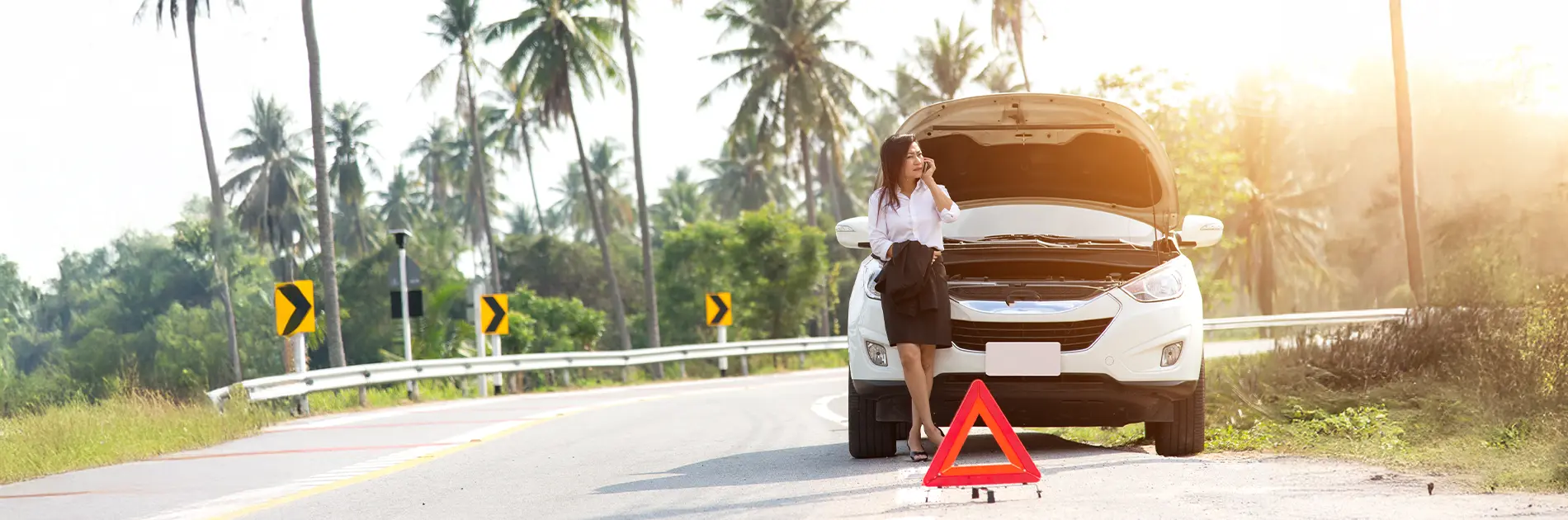
When someone’s car breaks down, they aren’t browsing for options. They’re stranded, stressed, and searching their phone for the nearest, fastest help. This is why mastering SEO for roadside assistance is critical, as it puts your business at the top of their list when they need you most. Therefore, a good strategy makes sure that when a driver is in trouble, your company is the first one they find and call. Moreover, Towing SEO helps your business appear in local searches, giving you an edge over competitors. Our team of SEO experts optimizes your website, content, and local listings to connect you instantly with people who are looking for immediate towing services. In the fast-paced world of roadside emergencies, being visible online can turn a desperate driver into a loyal customer and lead to more calls!
A good business owner knows how people search for things. If you look up “coffee shop near me,” you probably pick one of the first few results Google shows. Now imagine that same situation, but instead of coffee, a driver has a flat tire on a busy highway. The need is much more urgent, and they need help pronto! This is the whole game for your roadside assistance company. Local SEO isn’t about long-term branding; it’s about being the immediate solution to a problem happening right now.
Old marketing methods like flyers or billboards don’t work for emergencies. They can’t match the speed of a Google search. When a driver is in distress, your online visibility acts as your storefront and salesperson. The market for roadside help is growing. The global vehicle roadside assistance market is projected to hit USD 44.1 billion by 2035. That’s a huge jump from USD 28.7 billion in 2025. A solid online strategy is your ticket to getting a piece of that growth.
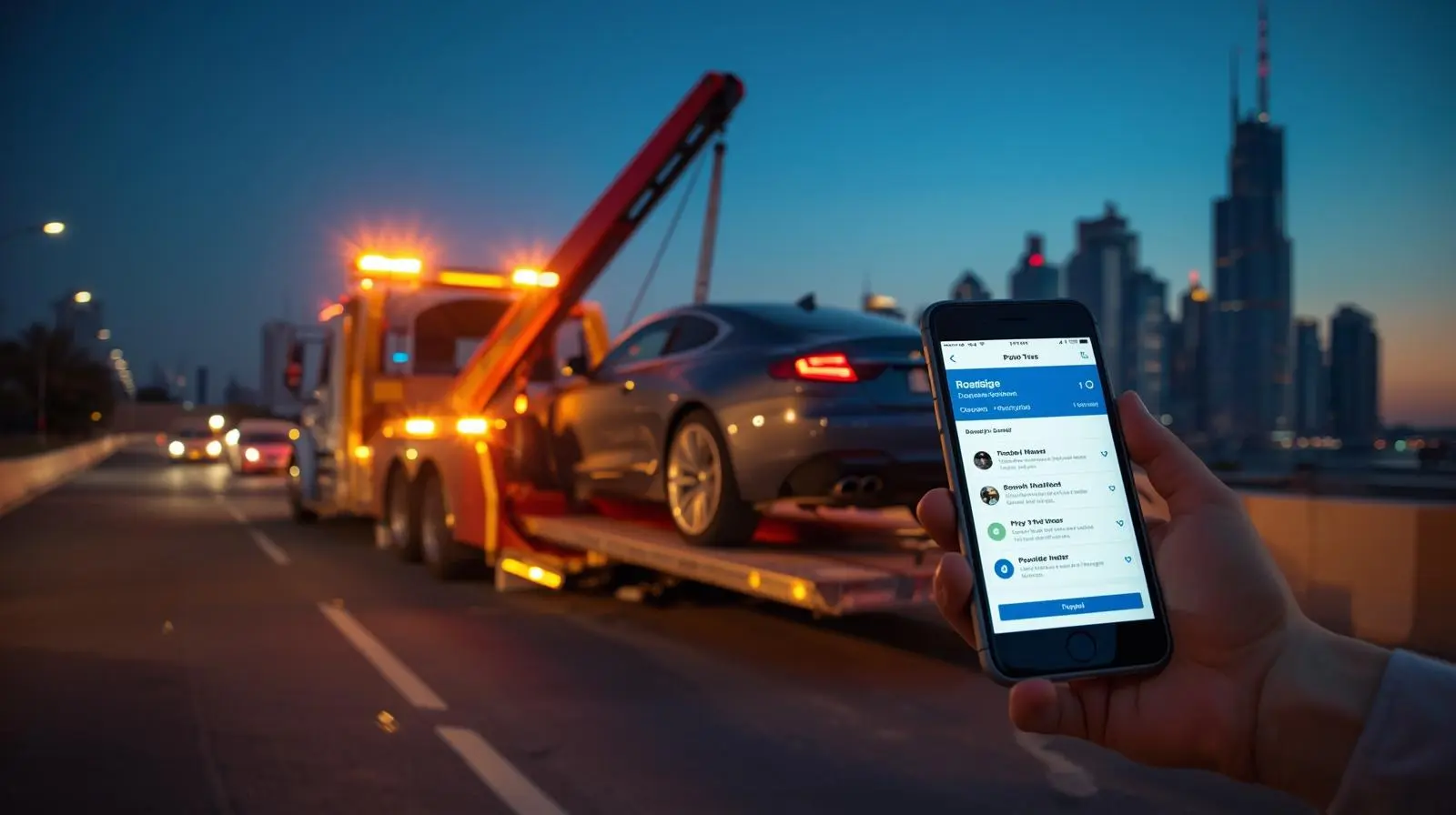
Your Google Business Profile is your most important online asset. When a driver is stuck, the Google Maps results are their lifeline. If your profile isn’t optimized with towing seo, then you’re giving calls and money to your competition. You have to think of your profile as your emergency billboard. Therefore, a stranded driver needs to know three things fast: who you are, what you do, and if they can trust you. An incomplete profile looks unreliable, and they’ll just tap the next name on the list. And that’s how you lose business!
Your categories tell Google what you do so it can show you to the right people. Moreover, it also helps your business rank better. Here are the categories that matter:
If you don’t show up in the top local search results, you don’t exist in their moment of need. In short, your next customer is on the side of a highway with their phone, ready to call the first company that looks professional, nearby, and trustworthy.
Your business description isn’t the place for corporate jargon. You have 750 characters to convince a stressed person that you are their solution. Therefore, your business description has to be direct, empathetic, and use the keywords they’re thinking of.
You have to put yourself in their shoes. What do they need to know?
Here’s an example that works:
“Stranded in the Dallas-Fort Worth area? We offer fast, 24/7 roadside assistance and towing. Whether you’ve got a flat tire, locked your keys in the car, or need an emergency tow, our crew is ready to roll. We handle jump-starts, fuel delivery, and lockouts across Dallas, Plano, and Arlington. Call now for immediate help!”
This is clear, mentions specific services and locations, and has an urgent, helpful tone.
You have to imagine someone stuck on the highway at night in the rain. They pull out their phone to Google for help. Your website is the first one they click. You have about three seconds to convince them you’re the right call. This isn’t a normal customer journey. It’s a crisis. Your website can’t just be a pretty brochure; it needs to be an emergency tool for someone who is stressed and distracted. Therefore, it’s to be optimized to help them out on the spot. Here are some elements that are important:
Let’s be clear: 100% of your emergency customers are on a smartphone. Your website must be built for their experience. That means more than just having a site that “shrinks to fit.” You have to think about their situation. They’re likely using one hand, and they have zero patience for tiny text or hunting for a phone number. A true mobile-first design assumes the user is on their phone. Every button, font, and image is optimized for a small screen and a quick, high-stakes interaction.
In an emergency, a slow-loading website is a lost customer. If your page takes more than a few seconds to appear, that driver is hitting the “back” button and calling your competitor.
This might be the most important element on your site. When someone is stranded, they want to talk to a person and fast! Your phone number needs to be impossible to miss. Make it a big, bright button that stays “sticky” at the top or bottom of the screen. Label it with something direct like “Tap to Call for Immediate Help.” This simple feature removes all friction and turns a simple seo for roadside assistance into a phone call.
Your website’s structure needs to speak Google’s language. This is how you show up when someone searches for a specific problem in a specific place. A single “services” page is not enough. You need dedicated pages for every service and every location you cover.
This strategy tells Google that you’re the local authority for these exact services. It’s a powerful way to get the most qualified traffic.
When a driver is stranded, they’re looking for someone they can trust. In roadside assistance SEO, trust is a real ranking factor you build through consistency and customer feedback.
A local citation is any online mention of your business’s Name, Address, and Phone number (NAP). You’ll find them on sites like Yelp, Yellow Pages, and other directories. The most important rule here is NAP consistency. Every single listing must be a perfect match to the information on your Google Business Profile. It is a very important part of seo for roadside assistance. You have to understand that even a tiny variations, even “Street” vs. “St.” can cause problems for search engines. Therefore, consistent NAP information is a key trust signal for Google. It confirms your business is real and located where you say you are, which is critical for local search results.
If citations prove you are who you say you are, reviews prove you’re good at what you do. For a stranded driver, a long list of recent, positive reviews is often the final push they need to call. Getting reviews doesn’t have to be awkward. The best time to ask is right after you’ve helped someone.
“Glad we could get you back on the road! Hey, if you have a second, would you mind leaving us a quick review on Google? It really helps other drivers find us when they’re in a jam.”
SEO for roadside assistance is about being there when drivers need you most. By optimizing your Google Business Profile, building a fast mobile website, creating service-specific pages, and earning customer trust through reviews, you position your business as the first call in an emergency. At Digital Perfection, we specialize in helping roadside assistance companies dominate local search results. From PPC campaigns to local SEO strategies, we give you the tools to turn online searches into phone calls. Let us help you capture more customers when they need you most. You can take care of your business on the ground, while we handle your digital presence and get you more leads. Book a free audit today and take your business to the next.
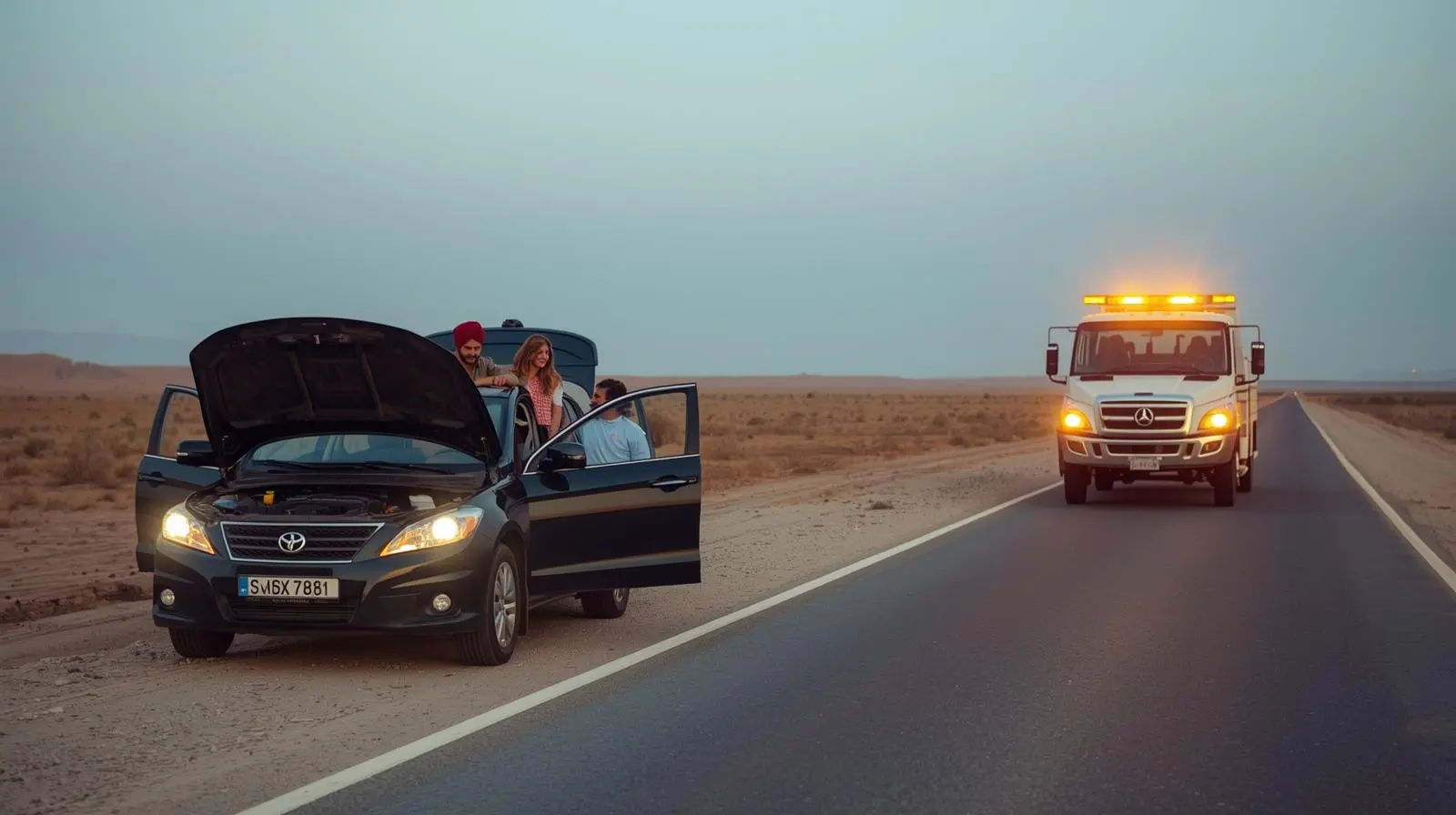
SEO makes your towing or roadside service visible at the exact moment drivers search for help. When someone is stranded, you want your business to appear first so the call comes to you.
Towing SEO focuses on ranking your business for hyper-local searches like “tow truck near me.” It boosts visibility, builds trust, and helps you get more emergency calls fast.
An optimized profile shows your services, hours, reviews, and location. In emergencies, drivers rely on Google Maps, so a complete profile makes your business look reliable and ready.
Emergency customers won’t wait for a slow site to load. A fast, mobile-friendly website keeps users from bouncing and pushes them to tap your call button instantly.
Positive reviews tell Google, and stressed drivers, that your service is trustworthy. Consistent, recent reviews can boost your ranking and help turn online searches into real calls.
When someone’s car breaks down, they aren’t browsing for options. They’re stranded, stressed, and searching their phone for the nearest, fastest help. This is why mastering SEO for roadside assistance is critical, as it puts your business at the top of their list when they need you most. Therefore, a good strategy makes sure that when a driver is in trouble, your company is the first one they find and call. Moreover, Towing SEO helps your business appear in local searches, giving you an edge over competitors. Our team of SEO experts optimizes your website, content, and local listings to connect you instantly with people who are looking for immediate towing services. In the fast-paced world of roadside emergencies, being visible online can turn a desperate driver into a loyal customer and lead to more calls!
A good business owner knows how people search for things. If you look up “coffee shop near me,” you probably pick one of the first few results Google shows. Now imagine that same situation, but instead of coffee, a driver has a flat tire on a busy highway. The need is much more urgent, and they need help pronto! This is the whole game for your roadside assistance company. Local SEO isn’t about long-term branding; it’s about being the immediate solution to a problem happening right now.
Old marketing methods like flyers or billboards don’t work for emergencies. They can’t match the speed of a Google search. When a driver is in distress, your online visibility acts as your storefront and salesperson. The market for roadside help is growing. The global vehicle roadside assistance market is projected to hit USD 44.1 billion by 2035. That’s a huge jump from USD 28.7 billion in 2025. A solid online strategy is your ticket to getting a piece of that growth.
Your Google Business Profile is your most important online asset. When a driver is stuck, the Google Maps results are their lifeline. If your profile isn’t optimized with towing seo, then you’re giving calls and money to your competition. You have to think of your profile as your emergency billboard. Therefore, a stranded driver needs to know three things fast: who you are, what you do, and if they can trust you. An incomplete profile looks unreliable, and they’ll just tap the next name on the list. And that’s how you lose business!
Your categories tell Google what you do so it can show you to the right people. Moreover, it also helps your business rank better. Here are the categories that matter:
If you don’t show up in the top local search results, you don’t exist in their moment of need. In short, your next customer is on the side of a highway with their phone, ready to call the first company that looks professional, nearby, and trustworthy.
Your business description isn’t the place for corporate jargon. You have 750 characters to convince a stressed person that you are their solution. Therefore, your business description has to be direct, empathetic, and use the keywords they’re thinking of.
You have to put yourself in their shoes. What do they need to know?
Here’s an example that works:
“Stranded in the Dallas-Fort Worth area? We offer fast, 24/7 roadside assistance and towing. Whether you’ve got a flat tire, locked your keys in the car, or need an emergency tow, our crew is ready to roll. We handle jump-starts, fuel delivery, and lockouts across Dallas, Plano, and Arlington. Call now for immediate help!”
This is clear, mentions specific services and locations, and has an urgent, helpful tone.
You have to imagine someone stuck on the highway at night in the rain. They pull out their phone to Google for help. Your website is the first one they click. You have about three seconds to convince them you’re the right call. This isn’t a normal customer journey. It’s a crisis. Your website can’t just be a pretty brochure; it needs to be an emergency tool for someone who is stressed and distracted. Therefore, it’s to be optimized to help them out on the spot. Here are some elements that are important:
Let’s be clear: 100% of your emergency customers are on a smartphone. Your website must be built for their experience. That means more than just having a site that “shrinks to fit.” You have to think about their situation. They’re likely using one hand, and they have zero patience for tiny text or hunting for a phone number. A true mobile-first design assumes the user is on their phone. Every button, font, and image is optimized for a small screen and a quick, high-stakes interaction.
In an emergency, a slow-loading website is a lost customer. If your page takes more than a few seconds to appear, that driver is hitting the “back” button and calling your competitor.
This might be the most important element on your site. When someone is stranded, they want to talk to a person and fast! Your phone number needs to be impossible to miss. Make it a big, bright button that stays “sticky” at the top or bottom of the screen. Label it with something direct like “Tap to Call for Immediate Help.” This simple feature removes all friction and turns a simple seo for roadside assistance into a phone call.
Your website’s structure needs to speak Google’s language. This is how you show up when someone searches for a specific problem in a specific place. A single “services” page is not enough. You need dedicated pages for every service and every location you cover.
This strategy tells Google that you’re the local authority for these exact services. It’s a powerful way to get the most qualified traffic.
When a driver is stranded, they’re looking for someone they can trust. In roadside assistance SEO, trust is a real ranking factor you build through consistency and customer feedback.
A local citation is any online mention of your business’s Name, Address, and Phone number (NAP). You’ll find them on sites like Yelp, Yellow Pages, and other directories. The most important rule here is NAP consistency. Every single listing must be a perfect match to the information on your Google Business Profile. It is a very important part of seo for roadside assistance. You have to understand that even a tiny variations, even “Street” vs. “St.” can cause problems for search engines. Therefore, consistent NAP information is a key trust signal for Google. It confirms your business is real and located where you say you are, which is critical for local search results.
If citations prove you are who you say you are, reviews prove you’re good at what you do. For a stranded driver, a long list of recent, positive reviews is often the final push they need to call. Getting reviews doesn’t have to be awkward. The best time to ask is right after you’ve helped someone.
“Glad we could get you back on the road! Hey, if you have a second, would you mind leaving us a quick review on Google? It really helps other drivers find us when they’re in a jam.”
SEO for roadside assistance is about being there when drivers need you most. By optimizing your Google Business Profile, building a fast mobile website, creating service-specific pages, and earning customer trust through reviews, you position your business as the first call in an emergency. At Digital Perfection, we specialize in helping roadside assistance companies dominate local search results. From PPC campaigns to local SEO strategies, we give you the tools to turn online searches into phone calls. Let us help you capture more customers when they need you most. You can take care of your business on the ground, while we handle your digital presence and get you more leads. Book a free audit today and take your business to the next.
SEO makes your towing or roadside service visible at the exact moment drivers search for help. When someone is stranded, you want your business to appear first so the call comes to you.
Towing SEO focuses on ranking your business for hyper-local searches like “tow truck near me.” It boosts visibility, builds trust, and helps you get more emergency calls fast.
An optimized profile shows your services, hours, reviews, and location. In emergencies, drivers rely on Google Maps, so a complete profile makes your business look reliable and ready.
Emergency customers won’t wait for a slow site to load. A fast, mobile-friendly website keeps users from bouncing and pushes them to tap your call button instantly.
Positive reviews tell Google, and stressed drivers, that your service is trustworthy. Consistent, recent reviews can boost your ranking and help turn online searches into real calls.

