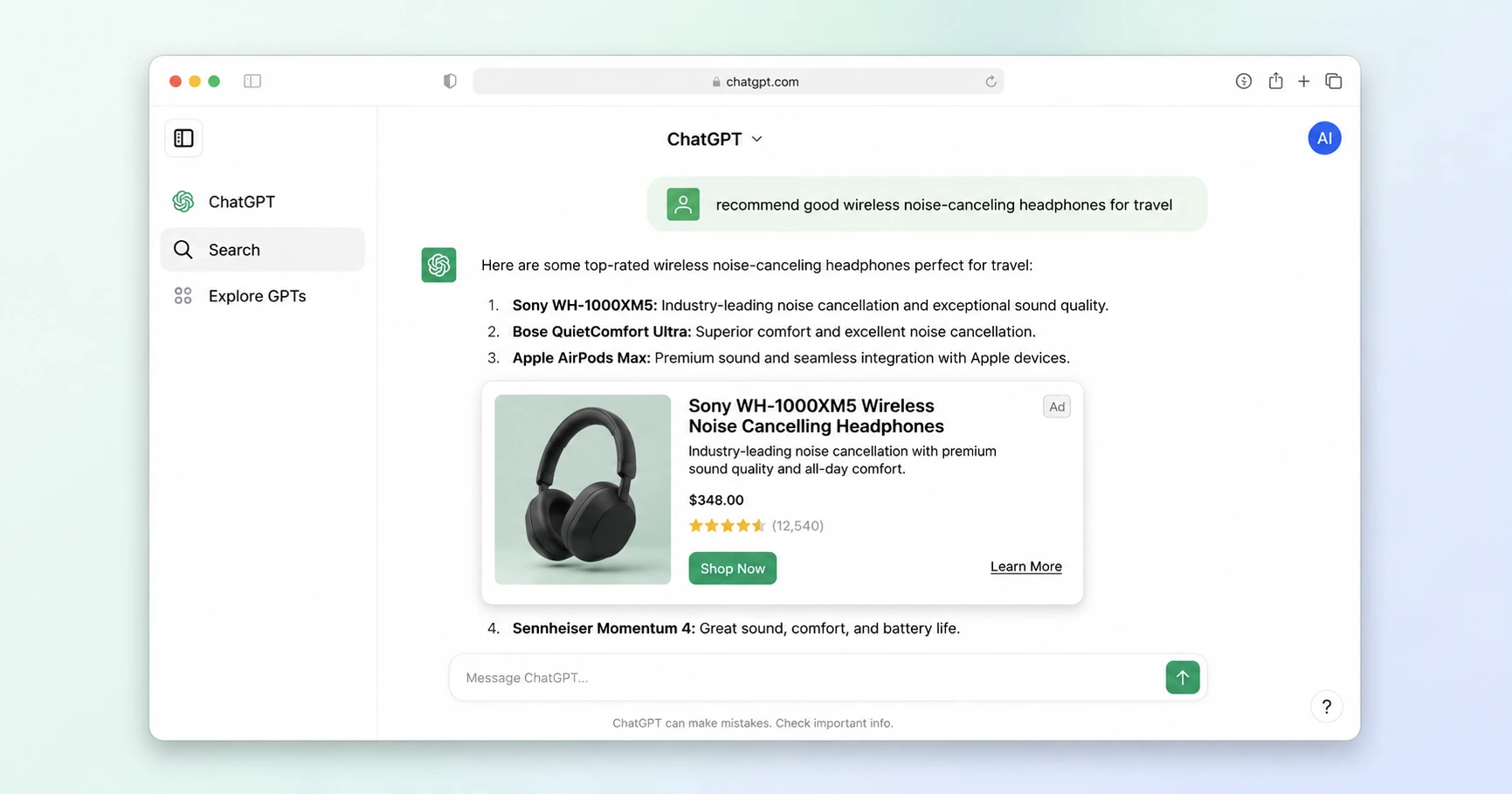
Digital marketing is entering a new era, and it is happening faster than most brands expected. For years, businesses relied heavily on traditional search engines to capture customers through keyword-based advertising. But now, conversational AI is changing how people discover products, compare services, and make buying decisions.
At the center of this transformation is openai ads, a new advertising ecosystem built directly into ChatGPT. Instead of targeting users based only on search keywords, OpenAI is introducing a model where ads can appear during natural conversations and decision-making moments. For marketers, agencies, and businesses, this shift could redefine paid search forever.
According to OpenAI, advertisers can now reach users while they “explore options, compare choices, and make decisions in ChatGPT.” This signals a major change in how digital advertising may work in the AI-first internet.
Traditional search advertising depends heavily on keywords. Someone types “best laptop for gaming,” and advertisers bid on that phrase to appear in search results. But conversational AI changes user behavior completely. Instead of short searches, users now ask detailed questions like:
These are high-intent conversations filled with context. OpenAI believes this creates a more powerful advertising environment because advertisers can connect with users during the actual decision-making process. This is one reason why openai ads news has become one of the hottest discussions in the digital marketing world.
The future of digital advertising is no longer theoretical. OpenAI has officially introduced its advertising ecosystem inside ChatGPT, giving marketers a first glimpse into how conversational advertising may work in the AI-first internet.
While the platform is still in limited rollout, the current structure already reveals how OpenAI plans to compete in the paid search industry. From campaign setup to conversational targeting, this system is very different from traditional advertising platforms like Google Ads or Meta Ads.
OpenAI’s advertising platform is accessible through Ads.com, but it is not fully open to everyone yet. At the moment, the platform is only available in selected countries, mainly the United States. Businesses in countries like India still do not have direct access. Even inside the U.S., OpenAI is approving advertisers manually through a limited review process. There are also strict eligibility conditions:
This controlled rollout shows that OpenAI is still testing and refining the system before a wider launch.
Many marketers are wondering why OpenAI publicly introduced an ads platform before making it fully accessible. The likely reason is strategic growth and investor confidence. Running large AI systems is extremely expensive. OpenAI continues investing heavily in infrastructure, computing power, and AI development. Advertising introduces a potential long-term revenue stream similar to what Google built around search. Launching the platform early allows OpenAI to:
Even though the system is still developing, it signals that AI-driven advertising is becoming a serious business model.
OpenAI’s campaign structure feels familiar to advertisers already using Google Ads or Meta Ads. The platform currently follows a three-layer structure:
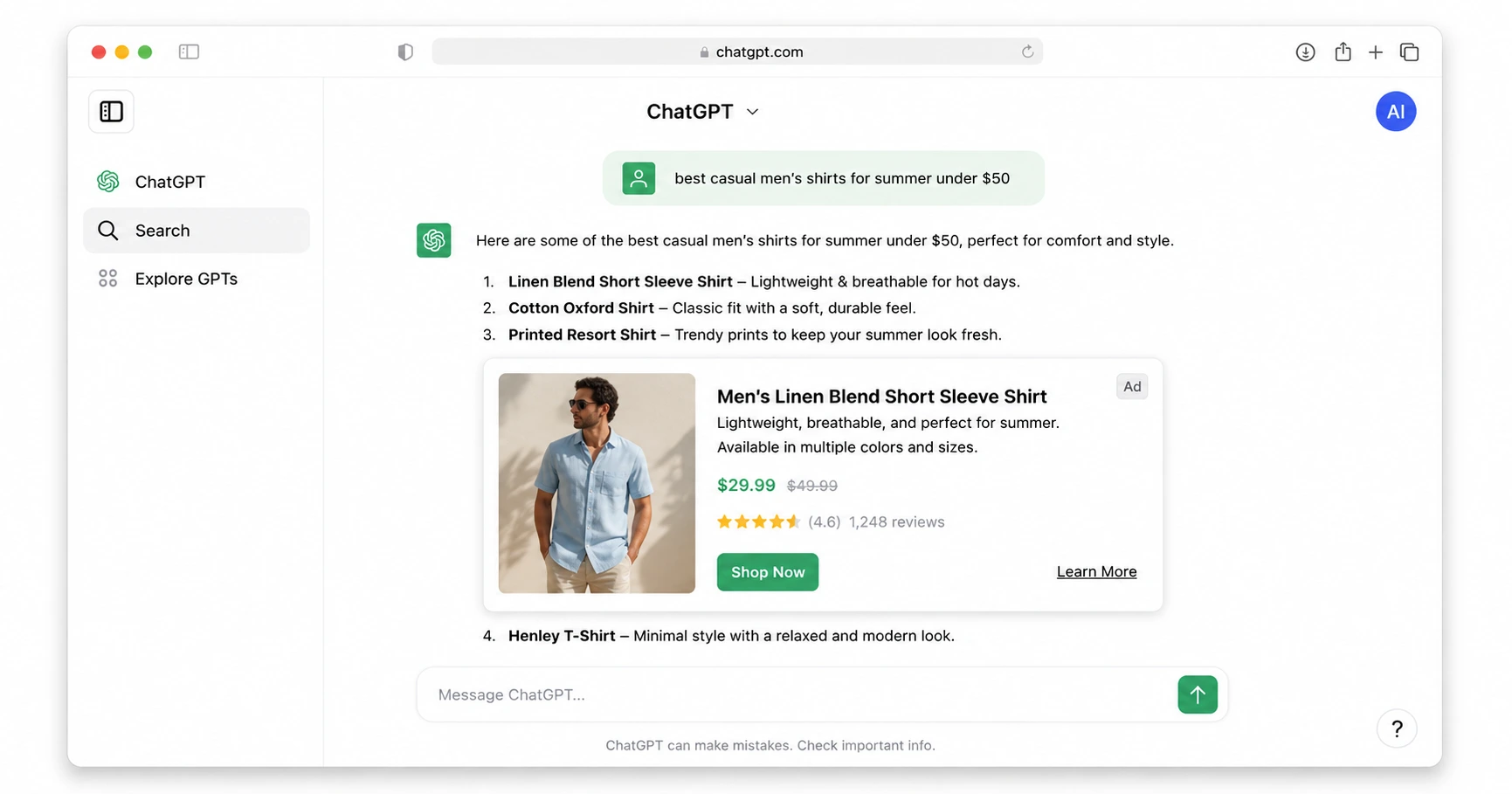
OpenAI ads currently appear below AI conversations rather than inside AI-generated answers. Each ad contains six main elements:
At the moment, the platform does not support advanced ad assets such as:
The system currently resembles simplified search ads with image support.
This is where OpenAI Ads become fundamentally different from traditional search advertising. Instead of relying only on keywords, OpenAI analyzes the conversation itself. The AI system evaluates:
If a conversation matches the advertiser’s offering, the system may display the ad underneath that discussion. This creates a much more contextual advertising experience than traditional search engines.
One unique feature currently available inside OpenAI Ads is called “Hints.” Hints allow advertisers to describe the types of conversations where they want their ads to appear. This means advertisers can guide the AI system beyond standard keywords.
For example, a business may not want to place every targeting phrase directly inside ad copy or landing pages. Instead, they can provide conversational hints during campaign setup to help OpenAI better understand where ads should appear. This feature could eventually become one of the biggest differentiators between AI-native advertising and traditional search ads.
Right now, advertisers can choose between two campaign objectives:
For reach campaigns, advertisers pay approximately $60 per 1000 impressions. This positions OpenAI Ads closer to premium advertising platforms like LinkedIn Ads rather than lower-cost social advertising networks.
Because conversational AI is highly sensitive, OpenAI has introduced strict advertising policies from the beginning. Currently restricted categories include:
OpenAI also restricts:
These restrictions apply not only to ad copy but also to:
The company is clearly prioritizing brand safety and regulatory protection during the early stages.
The reporting dashboard is currently simple compared to Google Ads or Meta Ads. Advertisers can currently monitor:
Performance reports can also be exported for deeper analysis.
Conversion Tracking Options
OpenAI currently supports two tracking methods:
JavaScript Pixel
A website tracking code similar to Meta Pixel or Google tags.
Conversion API
A server-side tracking method for more advanced advertisers.
These systems allow businesses to measure campaign effectiveness and user actions after clicks.
One of the biggest recent developments in openai ads chatgpt news today is the launch of product feed advertising. OpenAI now allows retailers to connect product catalogs directly to ChatGPT so the platform can automatically generate ads using product names, images, and attributes. This could dramatically simplify advertising for large e-commerce businesses.
Instead of manually building thousands of campaigns, brands can upload structured product feeds similar to Google Shopping feeds. The AI system then creates scalable ad experiences automatically. For online retailers, this may become one of the most efficient ad systems ever built.
This is the question dominating the industry right now. Google still controls a massive share of global search advertising, but AI search experiences are changing user habits rapidly. Many users now begin product research directly inside ChatGPT rather than traditional search engines.
That does not mean Google disappears overnight. However, OpenAI introduces something Google historically struggled with: deep conversational intent. A normal search query might reveal limited context. A multi-step AI conversation reveals far more about what a user actually wants.
Industry analysts already believe conversational commerce could become one of the biggest shifts in advertising since mobile marketing. Some Reddit discussions around openai ad systems even describe ChatGPT advertising as the beginning of a completely new ad economy where brands optimize for AI recommendations instead of traditional rankings.
There is also growing buzz around the rumored or anticipated openai super bowl ad 2026 discussions happening online.
While OpenAI itself has not confirmed a dedicated Super Bowl campaign in the sources above, AI advertising became a major conversation during the 2026 Super Bowl season because competing AI companies used major advertising slots to position themselves in the AI race.
If OpenAI eventually launches a high-profile Super Bowl campaign around ChatGPT ads, it could officially signal that conversational AI advertising has entered the mainstream marketing world. And when that happens, every major brand will start paying attention.
Businesses do not need to panic, but they do need to prepare. The smartest brands are already:
This transition will likely resemble the early days of Google Ads or social media advertising. The businesses that adapt early may gain massive advantages later.
The rise of OpenAI ChatGPT ads may become one of the most important changes in digital marketing history. Instead of chasing clicks through basic keyword targeting, marketers are entering an era driven by conversations, intent, and AI-assisted decision making.
Paid search is no longer just about ranking above competitors. It is becoming about being the most relevant recommendation inside intelligent conversations. Whether OpenAI ultimately dominates this space or not, one thing is already clear: conversational advertising is no longer a future prediction. It has officially begun.
What are OpenAI ChatGPT ads?
OpenAI ads are sponsored advertisements designed for ChatGPT and other OpenAI platforms, helping brands reach users during AI-driven conversations and product discovery.
How are OpenAI ads different from traditional Google Ads?
Unlike traditional Google Ads that rely mainly on keywords, ChatGPT ads focus on conversational intent, user context, and AI-powered recommendations.
Can businesses advertise directly on ChatGPT?
Yes, OpenAI has started introducing advertising tools and product feed ad systems that allow businesses to promote products and services within ChatGPT experiences.
Why are marketers paying attention to OpenAI ads?
Marketers believe conversational AI could become a major customer discovery platform, creating new opportunities for personalized advertising and higher-intent targeting.
Digital marketing is entering a new era, and it is happening faster than most brands expected. For years, businesses relied heavily on traditional search engines to capture customers through keyword-based advertising. But now, conversational AI is changing how people discover products, compare services, and make buying decisions.
At the center of this transformation is openai ads, a new advertising ecosystem built directly into ChatGPT. Instead of targeting users based only on search keywords, OpenAI is introducing a model where ads can appear during natural conversations and decision-making moments. For marketers, agencies, and businesses, this shift could redefine paid search forever.
According to OpenAI, advertisers can now reach users while they “explore options, compare choices, and make decisions in ChatGPT.” This signals a major change in how digital advertising may work in the AI-first internet.
Traditional search advertising depends heavily on keywords. Someone types “best laptop for gaming,” and advertisers bid on that phrase to appear in search results. But conversational AI changes user behavior completely. Instead of short searches, users now ask detailed questions like:
These are high-intent conversations filled with context. OpenAI believes this creates a more powerful advertising environment because advertisers can connect with users during the actual decision-making process. This is one reason why openai ads news has become one of the hottest discussions in the digital marketing world.
The future of digital advertising is no longer theoretical. OpenAI has officially introduced its advertising ecosystem inside ChatGPT, giving marketers a first glimpse into how conversational advertising may work in the AI-first internet.
While the platform is still in limited rollout, the current structure already reveals how OpenAI plans to compete in the paid search industry. From campaign setup to conversational targeting, this system is very different from traditional advertising platforms like Google Ads or Meta Ads.
OpenAI’s advertising platform is accessible through Ads.com, but it is not fully open to everyone yet. At the moment, the platform is only available in selected countries, mainly the United States. Businesses in countries like India still do not have direct access. Even inside the U.S., OpenAI is approving advertisers manually through a limited review process. There are also strict eligibility conditions:
This controlled rollout shows that OpenAI is still testing and refining the system before a wider launch.
Many marketers are wondering why OpenAI publicly introduced an ads platform before making it fully accessible. The likely reason is strategic growth and investor confidence. Running large AI systems is extremely expensive. OpenAI continues investing heavily in infrastructure, computing power, and AI development. Advertising introduces a potential long-term revenue stream similar to what Google built around search. Launching the platform early allows OpenAI to:
Even though the system is still developing, it signals that AI-driven advertising is becoming a serious business model.
OpenAI’s campaign structure feels familiar to advertisers already using Google Ads or Meta Ads. The platform currently follows a three-layer structure:
OpenAI ads currently appear below AI conversations rather than inside AI-generated answers. Each ad contains six main elements:
At the moment, the platform does not support advanced ad assets such as:
The system currently resembles simplified search ads with image support.
This is where OpenAI Ads become fundamentally different from traditional search advertising. Instead of relying only on keywords, OpenAI analyzes the conversation itself. The AI system evaluates:
If a conversation matches the advertiser’s offering, the system may display the ad underneath that discussion. This creates a much more contextual advertising experience than traditional search engines.
One unique feature currently available inside OpenAI Ads is called “Hints.” Hints allow advertisers to describe the types of conversations where they want their ads to appear. This means advertisers can guide the AI system beyond standard keywords.
For example, a business may not want to place every targeting phrase directly inside ad copy or landing pages. Instead, they can provide conversational hints during campaign setup to help OpenAI better understand where ads should appear. This feature could eventually become one of the biggest differentiators between AI-native advertising and traditional search ads.
Right now, advertisers can choose between two campaign objectives:
For reach campaigns, advertisers pay approximately $60 per 1000 impressions. This positions OpenAI Ads closer to premium advertising platforms like LinkedIn Ads rather than lower-cost social advertising networks.
Because conversational AI is highly sensitive, OpenAI has introduced strict advertising policies from the beginning. Currently restricted categories include:
OpenAI also restricts:
These restrictions apply not only to ad copy but also to:
The company is clearly prioritizing brand safety and regulatory protection during the early stages.
The reporting dashboard is currently simple compared to Google Ads or Meta Ads. Advertisers can currently monitor:
Performance reports can also be exported for deeper analysis.
Conversion Tracking Options
OpenAI currently supports two tracking methods:
JavaScript Pixel
A website tracking code similar to Meta Pixel or Google tags.
Conversion API
A server-side tracking method for more advanced advertisers.
These systems allow businesses to measure campaign effectiveness and user actions after clicks.
One of the biggest recent developments in openai ads chatgpt news today is the launch of product feed advertising. OpenAI now allows retailers to connect product catalogs directly to ChatGPT so the platform can automatically generate ads using product names, images, and attributes. This could dramatically simplify advertising for large e-commerce businesses.
Instead of manually building thousands of campaigns, brands can upload structured product feeds similar to Google Shopping feeds. The AI system then creates scalable ad experiences automatically. For online retailers, this may become one of the most efficient ad systems ever built.
This is the question dominating the industry right now. Google still controls a massive share of global search advertising, but AI search experiences are changing user habits rapidly. Many users now begin product research directly inside ChatGPT rather than traditional search engines.
That does not mean Google disappears overnight. However, OpenAI introduces something Google historically struggled with: deep conversational intent. A normal search query might reveal limited context. A multi-step AI conversation reveals far more about what a user actually wants.
Industry analysts already believe conversational commerce could become one of the biggest shifts in advertising since mobile marketing. Some Reddit discussions around openai ad systems even describe ChatGPT advertising as the beginning of a completely new ad economy where brands optimize for AI recommendations instead of traditional rankings.
There is also growing buzz around the rumored or anticipated openai super bowl ad 2026 discussions happening online.
While OpenAI itself has not confirmed a dedicated Super Bowl campaign in the sources above, AI advertising became a major conversation during the 2026 Super Bowl season because competing AI companies used major advertising slots to position themselves in the AI race.
If OpenAI eventually launches a high-profile Super Bowl campaign around ChatGPT ads, it could officially signal that conversational AI advertising has entered the mainstream marketing world. And when that happens, every major brand will start paying attention.
Businesses do not need to panic, but they do need to prepare. The smartest brands are already:
This transition will likely resemble the early days of Google Ads or social media advertising. The businesses that adapt early may gain massive advantages later.
The rise of OpenAI ChatGPT ads may become one of the most important changes in digital marketing history. Instead of chasing clicks through basic keyword targeting, marketers are entering an era driven by conversations, intent, and AI-assisted decision making.
Paid search is no longer just about ranking above competitors. It is becoming about being the most relevant recommendation inside intelligent conversations. Whether OpenAI ultimately dominates this space or not, one thing is already clear: conversational advertising is no longer a future prediction. It has officially begun.
What are OpenAI ChatGPT ads?
OpenAI ads are sponsored advertisements designed for ChatGPT and other OpenAI platforms, helping brands reach users during AI-driven conversations and product discovery.
How are OpenAI ads different from traditional Google Ads?
Unlike traditional Google Ads that rely mainly on keywords, ChatGPT ads focus on conversational intent, user context, and AI-powered recommendations.
Can businesses advertise directly on ChatGPT?
Yes, OpenAI has started introducing advertising tools and product feed ad systems that allow businesses to promote products and services within ChatGPT experiences.
Why are marketers paying attention to OpenAI ads?
Marketers believe conversational AI could become a major customer discovery platform, creating new opportunities for personalized advertising and higher-intent targeting.

